Contact at: info@sweiorg.org
SWEI Leads the Fight Against Gender-Based Violence and FGM in Displacement Communities

The Somali Women Empowerment Initiative (SWEI) has reaffirmed its leadership in safeguarding the rights and dignity of internally displaced women and children through a high-level roundtable dialogue held in Mogadishu, with support from the Somali Diaspora.
The dialogue placed strong emphasis on two interlinked protection concerns affecting internally displaced persons (IDPs) across Somalia: gender-based violence (GBV) and female genital mutilation (FGM). Both practices continue to pose severe physical, psychological, and social risks, particularly for women and girls living in displacement settings where protection mechanisms are often weak.
SWEI at the Forefront of Community-Led Advocacy
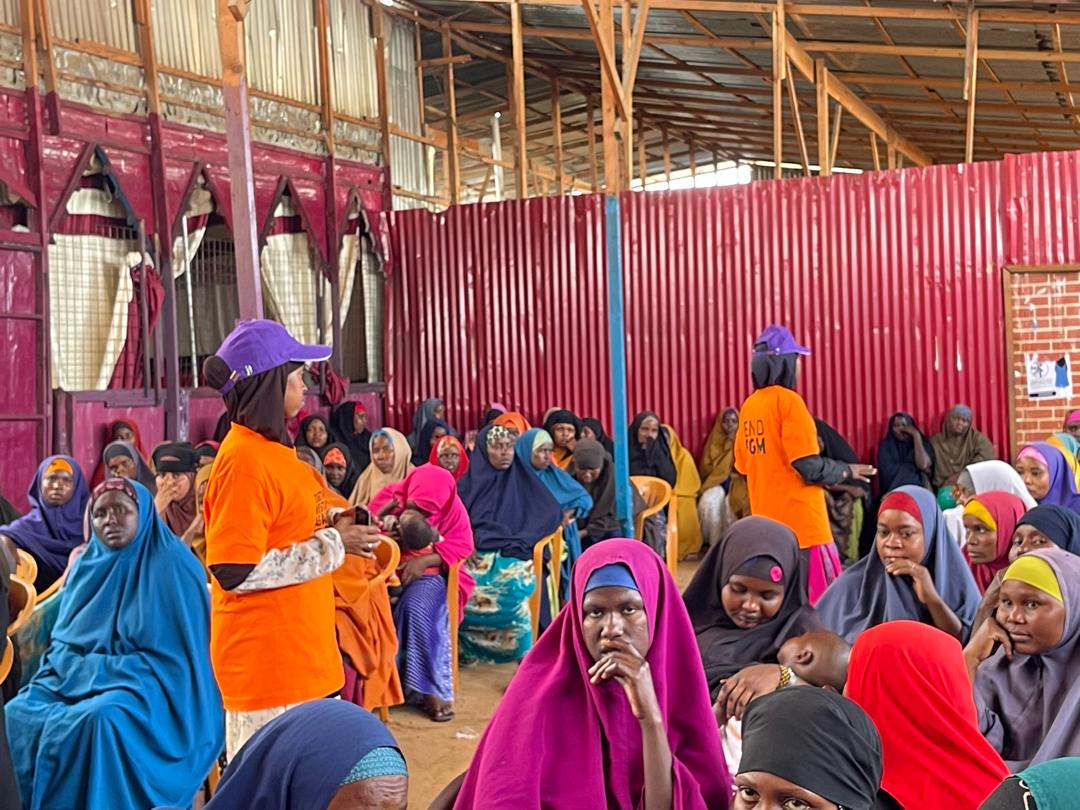
Organized by SWEI, the open field brought together approximately 200 participants, including representatives from IDP communities, traditional elders, women leaders, and local stakeholders from the Banadir region. The inclusive nature of the dialogue reflected SWEI’s community-centered approach, ensuring that those most affected by GBV and FGM were actively involved in identifying solutions.
SWEI emphasized the importance of breaking the culture of silence surrounding sexual and gender-based violence. Survivors were encouraged to come forward and seek available medical, psychosocial, and legal support services without fear of stigma or retaliation.
Addressing FGM as a Persistent Form of Gender-Based Violence
A key focus of the discussion was female genital mutilation, which remains widespread in Somalia and disproportionately affects girls in displaced communities. SWEI highlighted FGM as a severe violation of human rights and a form of gender-based violence that requires urgent and sustained action.
Participants discussed the need for continuous awareness campaigns targeting parents, caregivers, and traditional leaders to challenge harmful social norms that perpetuate FGM. SWEI stressed that community education, combined with survivor support and strong advocacy, is critical to ending the practice.